
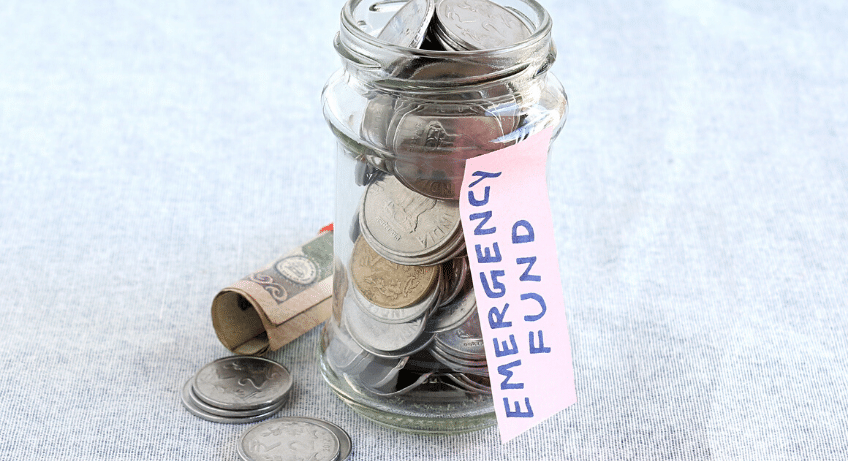

In Case of Emergency…
Sooner or later an emergency is bound to happen. Sometimes more than one will happen in a short time. Sometimes they’re not so little. Whether you call it your E-fund, your Murphy repellent, or just your savings you need at least three to six months worth of expenses set aside. This money is not your 401K, your Roth IRA, or another type of investment account that comes with penalties for early withdrawal.
This is a separate account (think high-yield savings, traditional savings, or even a money market) you can easily access funds from when you need them.
What is an Emergency?
An emergency is an unavoidable, unplanned circumstance that leads to an unavoidable, unplanned large expense. Think job loss, a major illness, unplanned leave-of-absence from work, not plane tickets are cheap so we’re going to Maui. True situations you need to make sure that as unpleasant or traumatic as they can be your family is ready to weather the storm financially.
Not ready for one?
Most Americans aren’t; in fact, according to a recent Bankrate survey, most American households can’t even handle a $1,000 setback. This in itself is an emergency! If you really think about it, $1,000 doesn’t go far in a true emergency. It might not even cover your deductible if you settled for a low premium, high deductible plan. It probably won’t replace the old hot water heater that seems like a ticking time bomb in your basement either.
So what do you do?
You need to adjust your budget to start saving for that emergency before there is one. Ever heard of Murphy’s Law? “If anything can go wrong, it will.” Isn’t that the truth! Don’t wait for an emergency to start your emergency fund! Look at your monthly budget and see if you have any wiggle room to add to your savings. Don’t have a budget? That’s an even bigger emergency! See my Budgeting pages for information about how to get started.
Any amount you can set aside will be beneficial. If you just save $100 for a year at the end of that year you will be in a more comfortable position than most American households.
Maybe you have a side hustle. If you don’t, but want suggestions, see my article “How do You Hustle? Legitimate Side Hustle Ideas,” for more information. Instead of throwing the additional stream(s?) of income at debt consider funding your emergency fund first.
However you choose to fund your emergency fund, be sure to start! You can’t prevent bad things from happening, but we can do our best to make sure we are prepared if and when they do happen. Don’t let that inevitable $1,000 emergency wreak havoc on your family’s finances; get your emergency fund ready as soon as possible!
My family is in Baby Step 3; we are out of consumer debt and beefing up our emergency fund. We currently have almost 32% of our goal saved. I am trying to get creative stretching our budget and working some small side hustles to add to it. You can follow our progress on Instagram under my handle @alifeonadime. We are 9 days into July and I’ve managed to save $30 so far! It isn’t much, but every little bit helps! Follow along for updates on my family and share yours with me here in the comments! I would love to cheer you on too!
[…] you remember from Emergency: Why You Need an Emergency Fund Now the average American household isn’t prepared for a $1,000 expense. The simple move of saving […]
[…] for Christmas if you haven’t already, put the money saved toward your debt, or add it to the emergency fund. And for #blogtober day 2 here are my top 3 challenges to help you survive and succeed in a […]
[…] can go bad – they will) you weren’t prepared for then it’s time to beef up the emergency fund. If you just didn’t have one, then it’s time to start. You just saw first hand what can […]
[…] you know our son cut his hand this summer. Quite literally days after I published a post titled Emergency! Why You Need an Emergency Fund Now we experienced our own emergency. You can read Our Emergency: Why We Cash Flow Medical Bills and […]
[…] emergency fund is not large or even “fully funded,” but building it up was already a priority and that […]
[…] satellite you’re likely paying about $100 a month. That’s a lot of money! Read my post Emergency! Why You Need an Emergency Fund Now! and you’ll see that the average American family doesn’t have the cash to handle even a […]
[…] Tuesday I posted Emergency! Why You Need an Emergency Fund Now! I talked about how this particular item is our financial focus right now and where we are in the […]